Building Capacity for Mastercard Foundation Scholars in Leadership, Knowledge, and Skills for Public Science Engagement
Following the successful kick-off of the 2026 Africa Scientifique: Leadership, Knowledge, and Skills for Science Communication annual three-phase programme’s Introductory Workshop (Phase 1) in January, AIMS South Africa, in partnership with African Gong, continued its journey with Phase 2 of this transformative Afrocentric capacity-building initiative.
This year, the Africa Scientifique (AS) programme at AIMS South Africa is mainstreaming the programmatic framework for delivering to two streams of beneficiaries: AIMS Mastercard Foundation Scholars and Scholars from external partner universities in South Africa.
2026 Africa Scientifique Programme for Mastercard Foundation Scholars
Phase 1 for Mastercard Foundation Scholars took place on January 31, 2026 and laid a strong foundation in which participants explored the strategic, global, historical, and contemporary dimensions of science communication and the envisioned outcomes for participants.
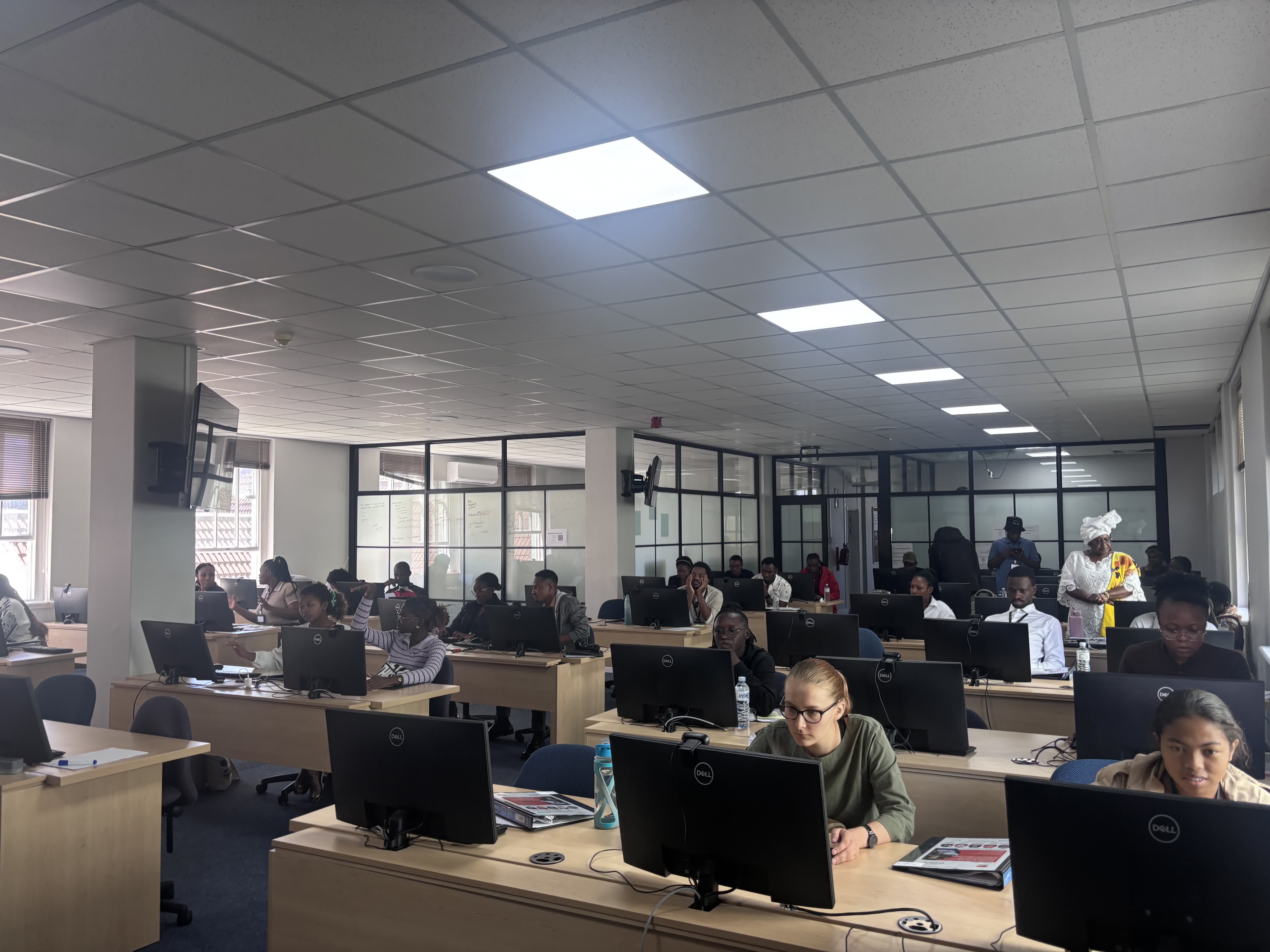
Building on this, Phase 2, an intensive and interactive three-day workshop dedicated to capacity building for Mastercard Foundation Scholars, took place from February 25 to 27, 2026 at AIMS South Africa. It provided scholars with deeper hands-on and minds-on engagement in science communication and public engagement practices. It aimed to empower them to leverage these skills for leadership, career growth, and impact across academia, industry, and beyond, thereby enhancing employability.
|
Opening remarks were delivered on the first day of the workshop by Prof. Ulrich Paquet, AI Director; Ms Ivy Mwai, Acting Director of the Scholars Program at the Mastercard Foundation; Dr Elizabeth Rasekoala, President of African Gong; and Dr Rejoyce Gavhi-Molefe, Manager of AIMS South Africa House of Science. |
In her keynote address, Ms Ivy Mwai emphasised that the Mastercard Foundation Scholars Programme extends beyond academic excellence and supports the development of purpose-driven leaders who use education to drive community transformation.
“A Mastercard Foundation Scholar is purpose-driven. You understand that education is not only for personal advancement, but for community transformation. You are African-centred, globally engaged, but grounded in the continent’s realities, histories, and aspirations.” - Ms Mwai
She highlighted that programmes such as Africa Scientifique play a vital role in strengthening scholars’ ability to communicate research, engage communities, and translate scientific knowledge into meaningful societal impact.
“Programmes like Africa Scientifique are central to our vision of developing well-rounded African scholars. The idea of excellence in science should go hand in hand with excellent communication, because science that cannot be communicated cannot create change.” - Ms Mwai
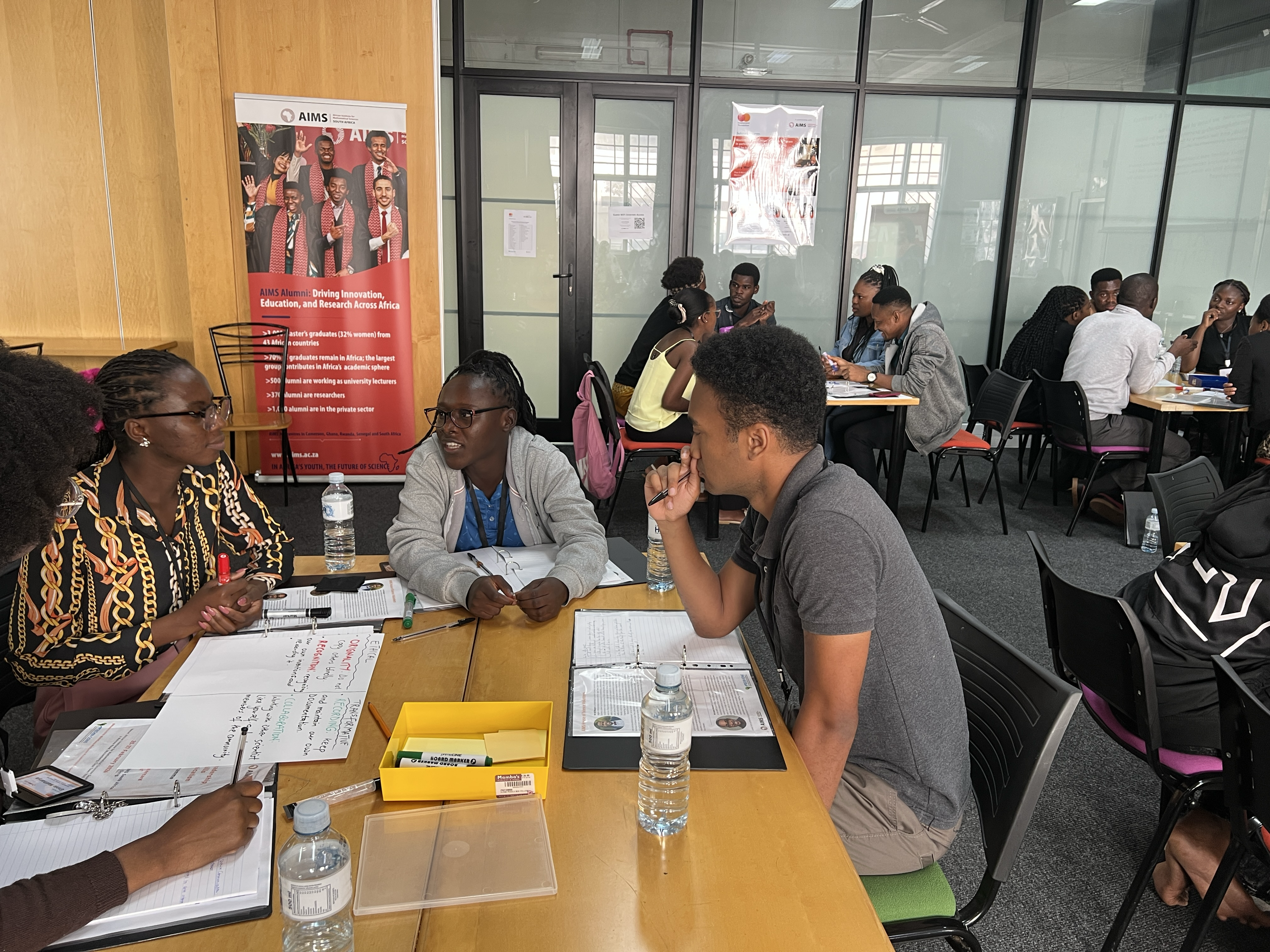
Over three days, participants engaged in hands-on, minds-on, informative, transformative, mindful, and highly interactive programmes and networking opportunities.
|
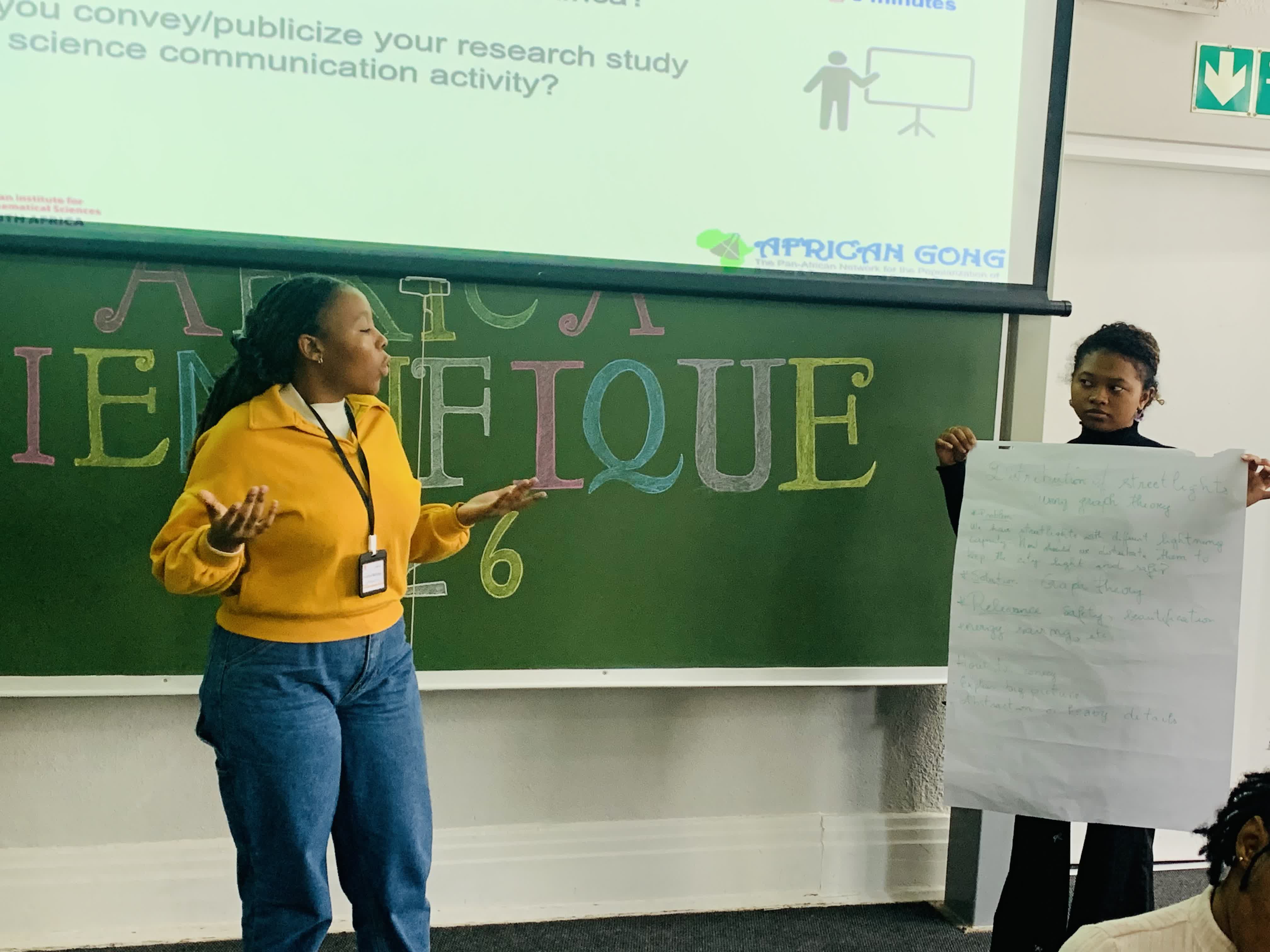
The House of Science Manager, African Gong President, and science communication experts facilitated the workshop. Mathematical scientists and AS Programme alumni currently pursuing careers in academia and industry also contributed as role models and mentors, creating a transformative, inclusive, and mentoring capacity-building experience. |
The workshop featured rich and diverse sessions that framed globally inclusive yet Afrocentric discourses, narratives, and good practice developments aimed at transforming participants’ understanding and strengthening commitment to equity, ethics, and practical public engagement action.
These practices foregrounded solidarity with African publics and recognised the importance of African local and Indigenous languages for science communication and public engagement across the continent, contextualised within broader sociocultural dimensions including gender inclusion.
|
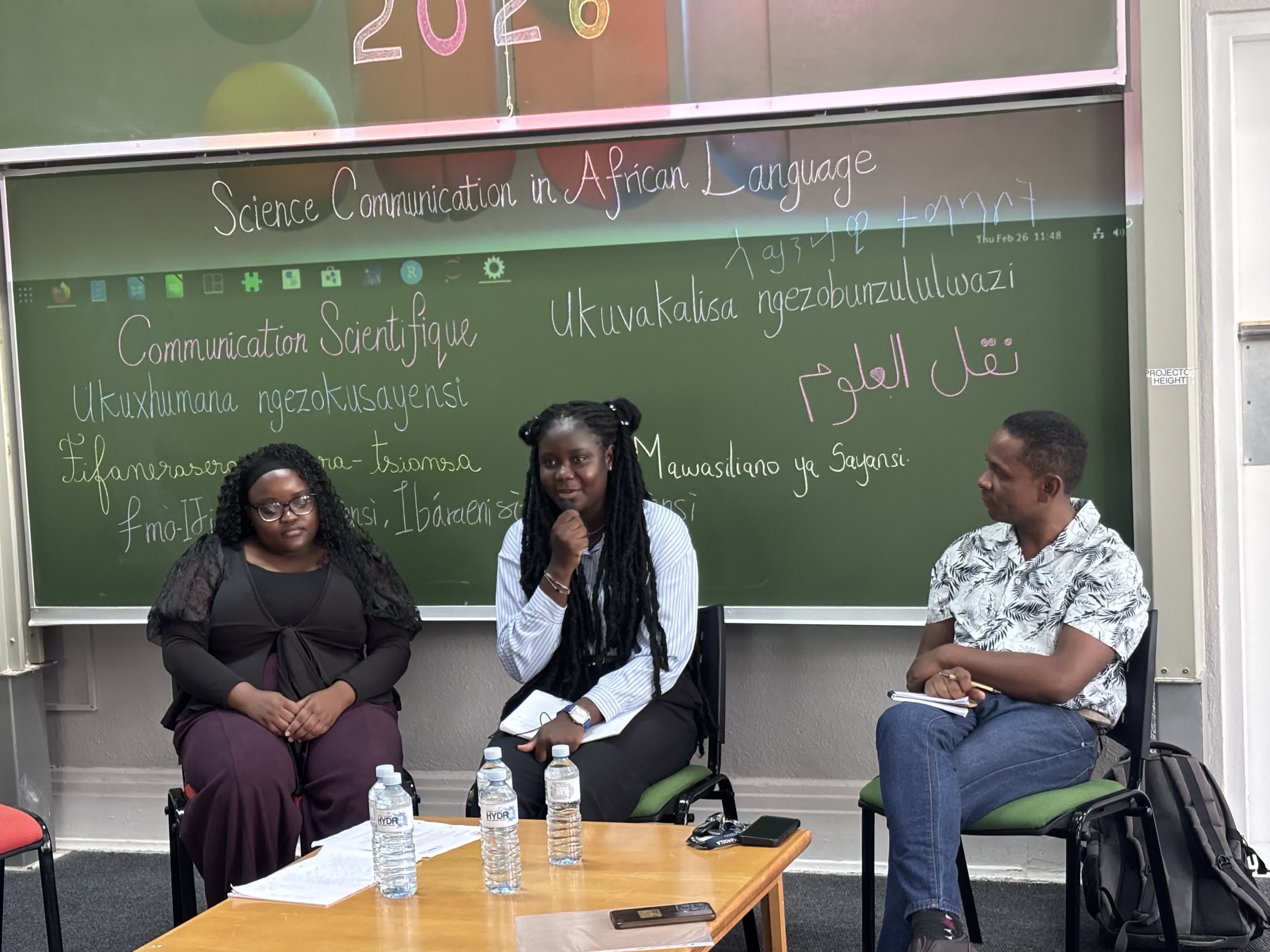
During the workshop, AS Programme alumni (2023-2025) contributed through presentations and panel discussion, sharing the programme's transformative impact on confidence, communication skills, career progression, and perspective as emerging African scientists. |
As part of the leadership for science communication outreach segment, alumni reflected on their six-month post-workshop mentoring and science outreach project activities. They discussed how they conceptualised, planned, and delivered their public engagement projects, and what value these projects brought to the communities they served.
The projects addressed socially relevant topics including waste management in Muizenberg Township, financial literacy related to SASSA grants for adults, AI literacy in African churches, and promotion of mathematics during South Africa National Science Week 2025.
Through these initiatives, alumni demonstrated how science communication can support community engagement while inspiring the next generation of scientists.
The alumni contributors included Mr Josiah Kimani (Research Associate, AfriClimate AI; AS Alumni 2025), Ms Marry Thekhwe (MSc Student, AIMS South Africa; AS Alumni 2023), Ms Ruth Naayi Odankey Abbey (PhD Student, AIMS South Africa; AS Alumni 2025), and Mr Clinton Paye Quee (PhD Student, AIMS South Africa; AS Alumni 2025).
The workshop also featured Prof. Naina Ralaivaosaona, mathematician, AIMS 2007 alumnus, and professor at Stellenbosch University. During the panel discussion, he shared lived experiences, insights, and practical strategies for developing and leveraging science communication skills to support career development in both academic and industry pathways.
|
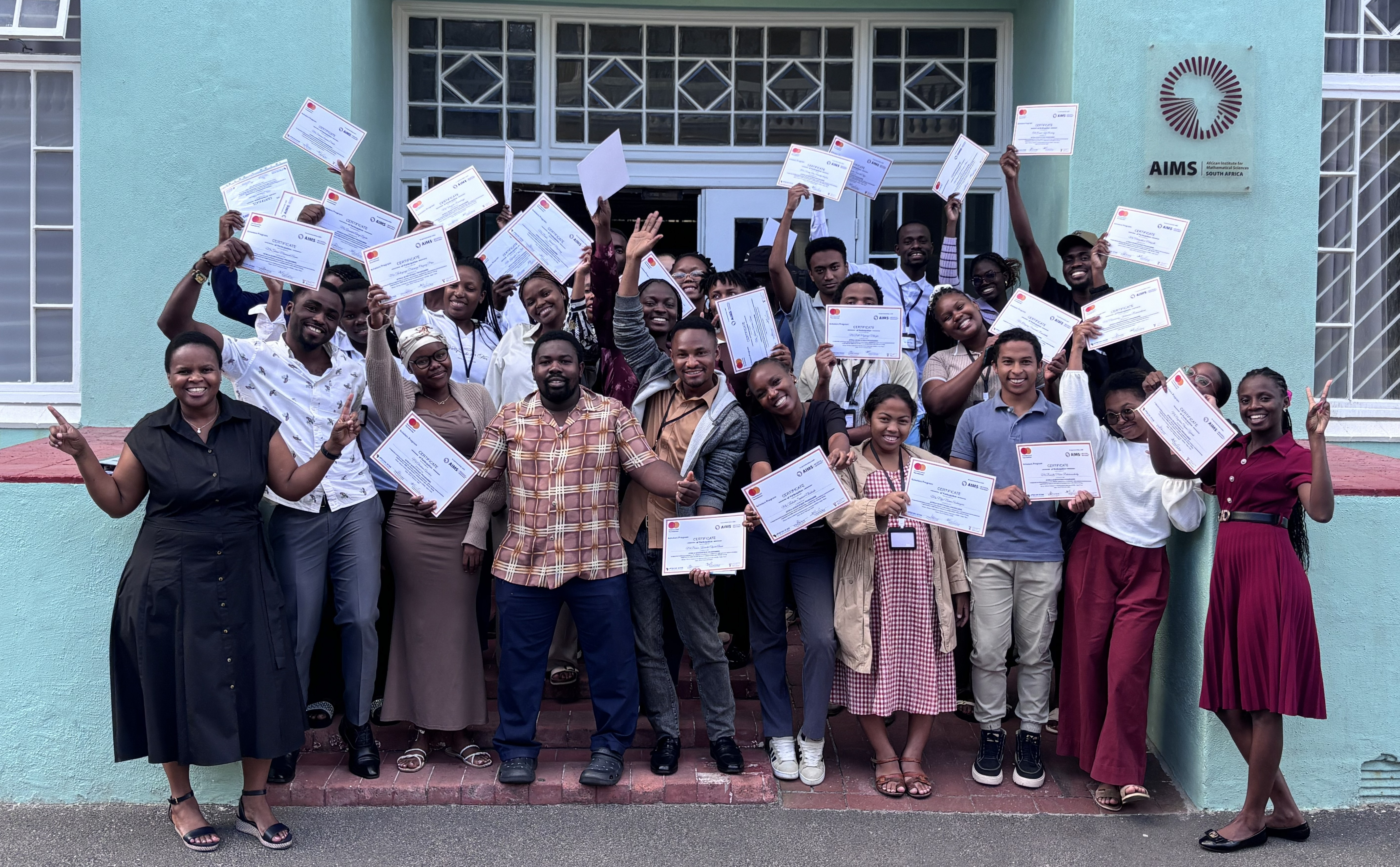
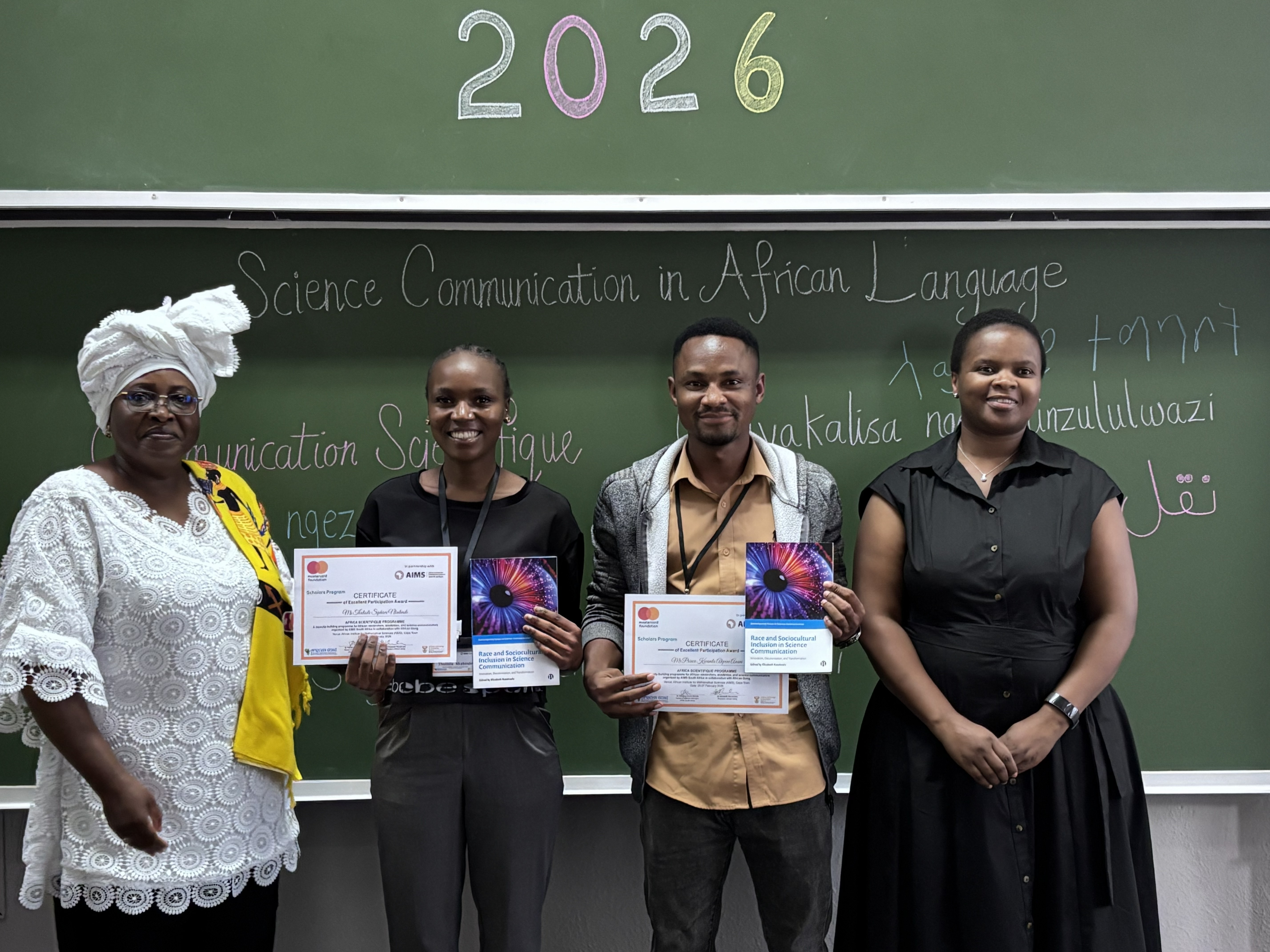
All participants who completed the three-day workshop received Certificates of Achievement in recognition of successful participation. Ms Thulisile Nkabinde and Mr Prince Anani received AS Excellence Awards, conferred by African Gong, in recognition of significant improvements in enrolment, engagement, communication, and presentation skills. |
Mr Bill Mbogho, Ms Isdora Ochieng, and Mr James Naoussi, Master’s students at AIMS South Africa, directed segments of the workshop as part of their leadership training. They also worked alongside student volunteers to support workshop coordination and logistics, gaining practical experience in programme facilitation and science communication outreach.
|
The workshop closed with recognition of participant achievement and leadership growth, reflecting the programme's broader vision of nurturing African scientists who can communicate with confidence and purpose in service of society. |
Workshop Outcomes and Participants’ Testimonials
|
"From February 25-27, we traded equations and proofs for something most of us find more difficult: explaining what we actually do to people who do not live and breathe mathematics. The Africa Scientifique workshop, 2026, with the theme Science Communication, brought together Mastercard Foundation Scholars at AIMS South Africa for three days of learning how to talk about our work to the general public. The format was interactive from the start: brief lectures followed by group activities, then presentations with feedback on explanations and body language. The highlight for me was the Try Me Baby...I'm Good activity. The facilitators used dating as an analogy for job and grant applications. We had to do creative adjustments to show why our candidate was worth considering. Not lies, just smart framing, a necessary skill for mathematicians. On the last day, each participant presented a community problem they plan to solve with mathematics within six months." - Victoria Idobo |
"I am beyond thrilled to share that I participated in a three-day Africa Scientifique Workshop: Leadership, Knowledge and Skills for Science Communication at AIMS South Africa. This transformative journey was a masterclass in bridging the gap between complex mathematical sciences and African communities. I was deeply honoured to be recognised with the African Gong Excellence Award and the Excellent Participation Award for active contribution to the programme's collective goals. The workshop deepened my commitment to a science communication approach that centres African culture, Indigenous knowledge, and local languages, and strengthened my confidence in public speaking and engagement." - Prince Kwamla Akpene Anani |
