Crossing Boundaries Through Mathematical Thinking
Inside the TurtleStitch Saturday Programme at AIMS South Africa
March and April have been exceptionally active months for the AIMSSEC department at AIMS South Africa. Across four intensive Saturday workshops, more than 160 Grade 10 learners from six partner schools gathered at AIMS South Africa as part of the three-year TurtleStitch project. These include: Intlanganiso Secondary School, Wallacedene High School, Crestway High School, Spine Road High School, Lavender Hill High School, and Masiphumelele High School.
For all the learners, this was their first time stepping onto the AIMS campus.
And that matters.
The energy is always palpable when learners arrive. There is excitement, curiosity, nervousness, and anticipation. The AIMSSEC team understands that for township learners, entering a prestigious institution like AIMS South Africa can feel unfamiliar and intimidating. Creating a sense of belonging, therefore, begins long before mathematics starts.
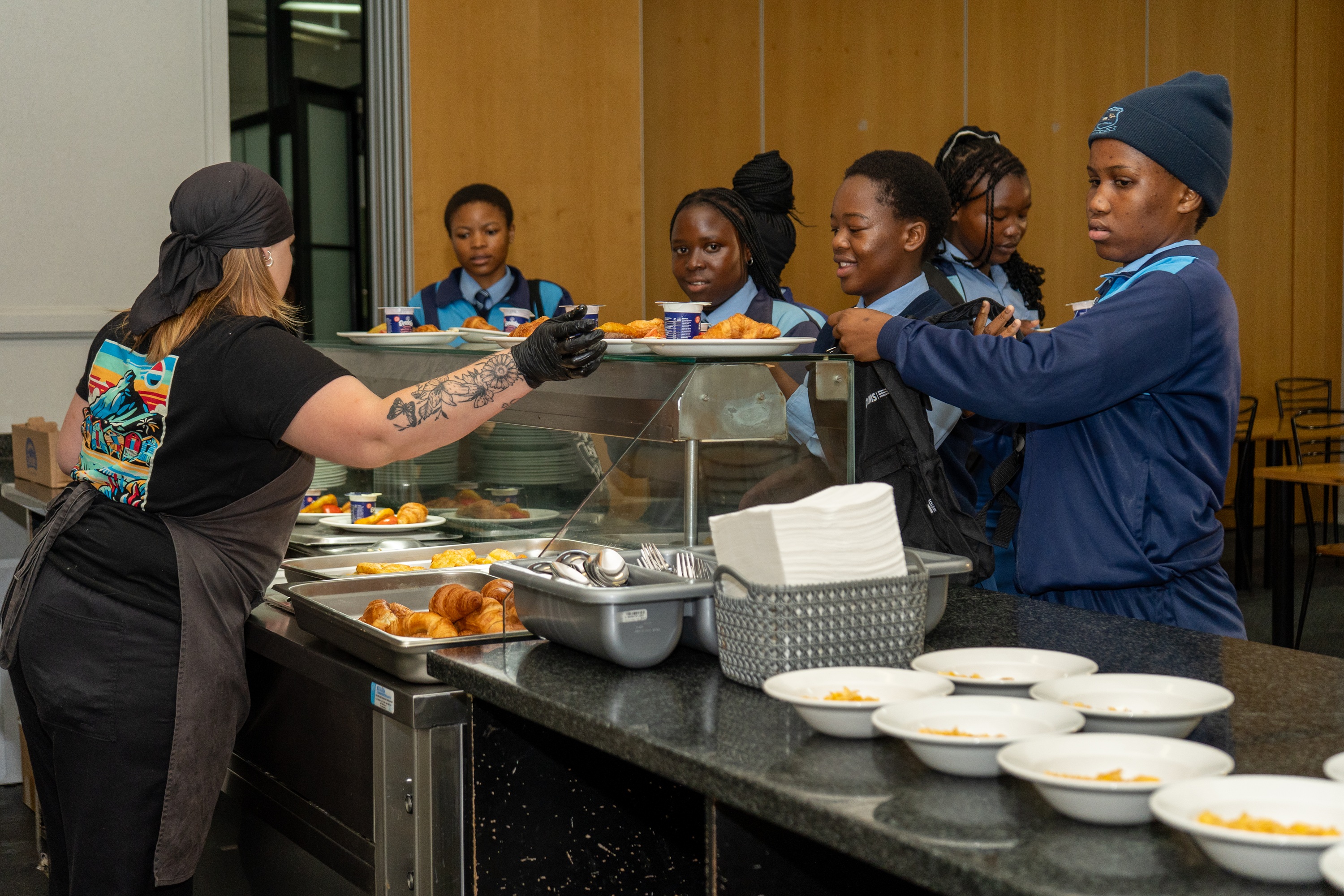
From organised transport and warm welcomes to shared meals, school bags, and carefully structured support systems, every detail is intentionally designed to communicate one message: you belong here.
Before mathematical thinking can flourish, learners must first feel seen, welcomed, and safe enough to participate.
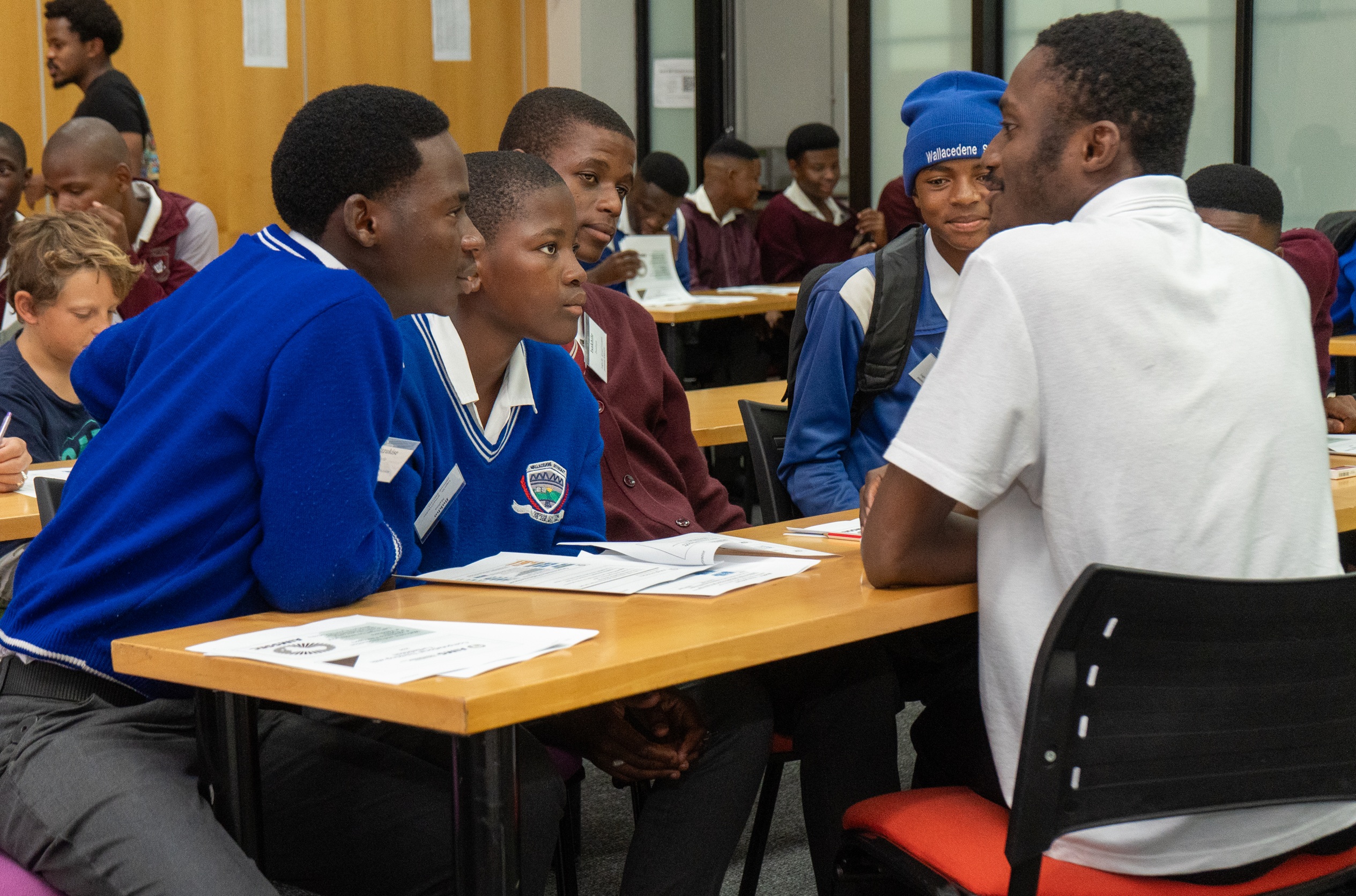
The workshops also intentionally brought together learners from different township communities — spaces that learners do not often cross socially or geographically. While these boundaries are frequently shaped by perceptions of danger or unfamiliarity, the programme creates opportunities for learners to work alongside peers they may otherwise never meet.
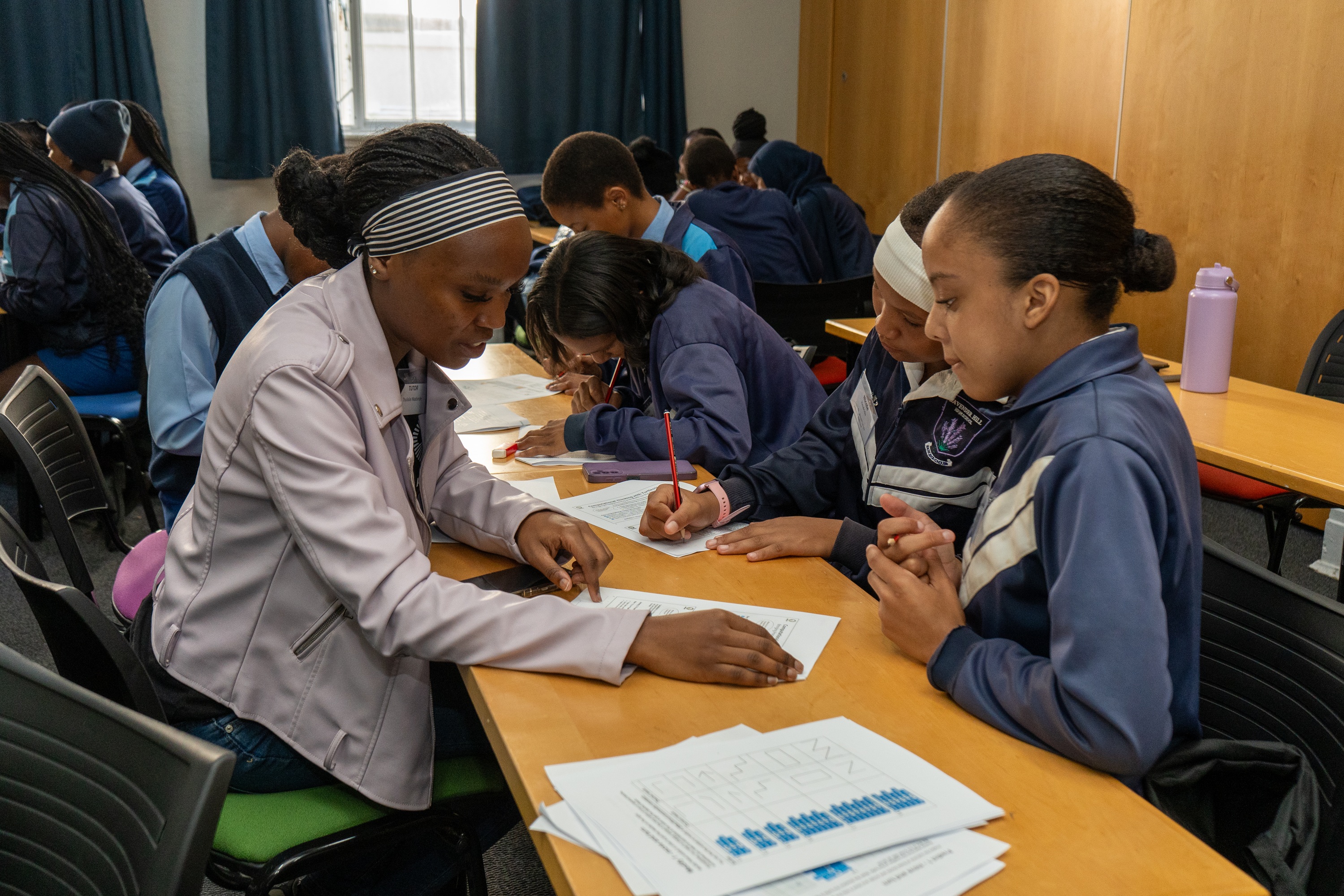
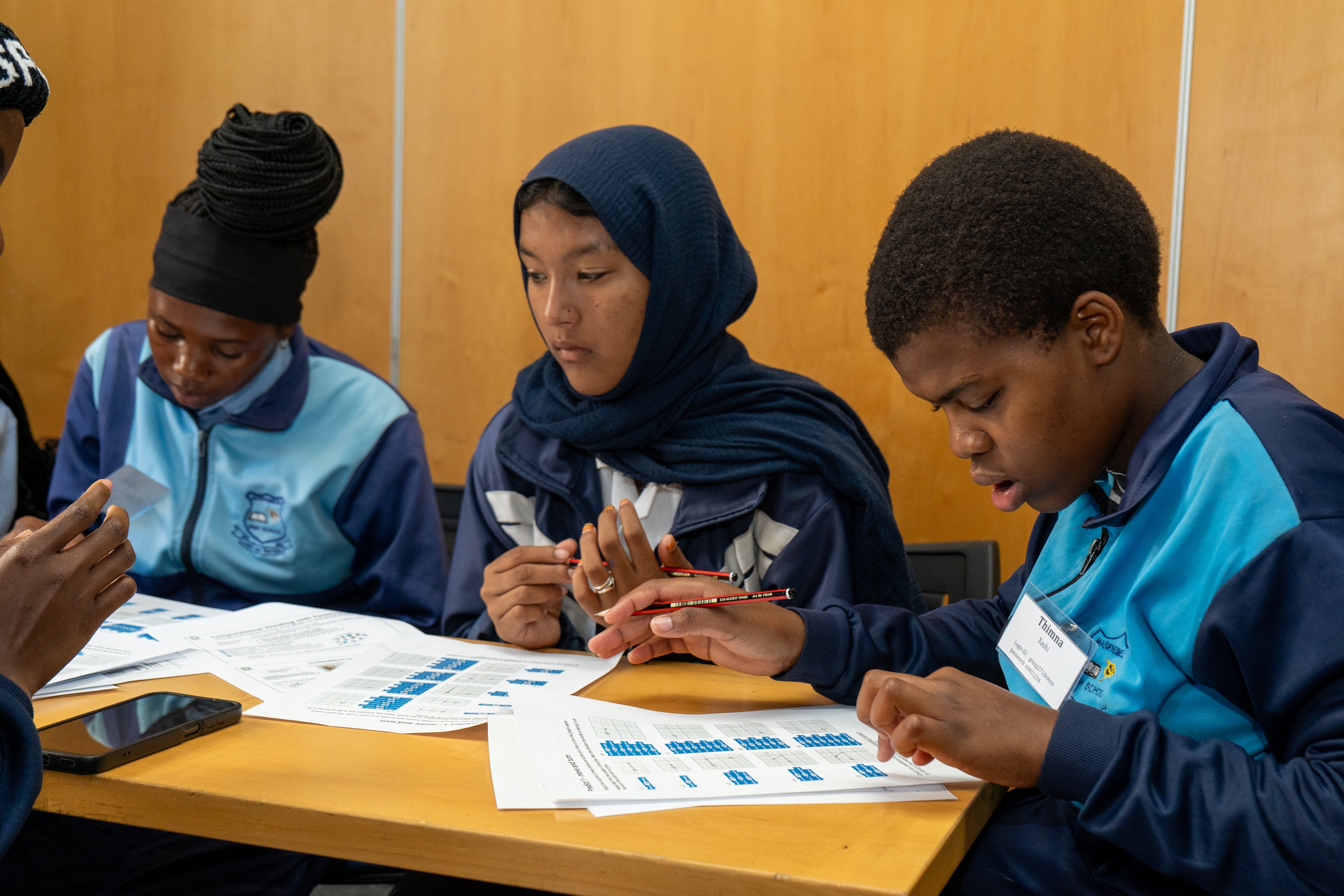
Initially, learners observe one another cautiously. By the end of the day, they are collaborating, debating, solving problems, and learning together.
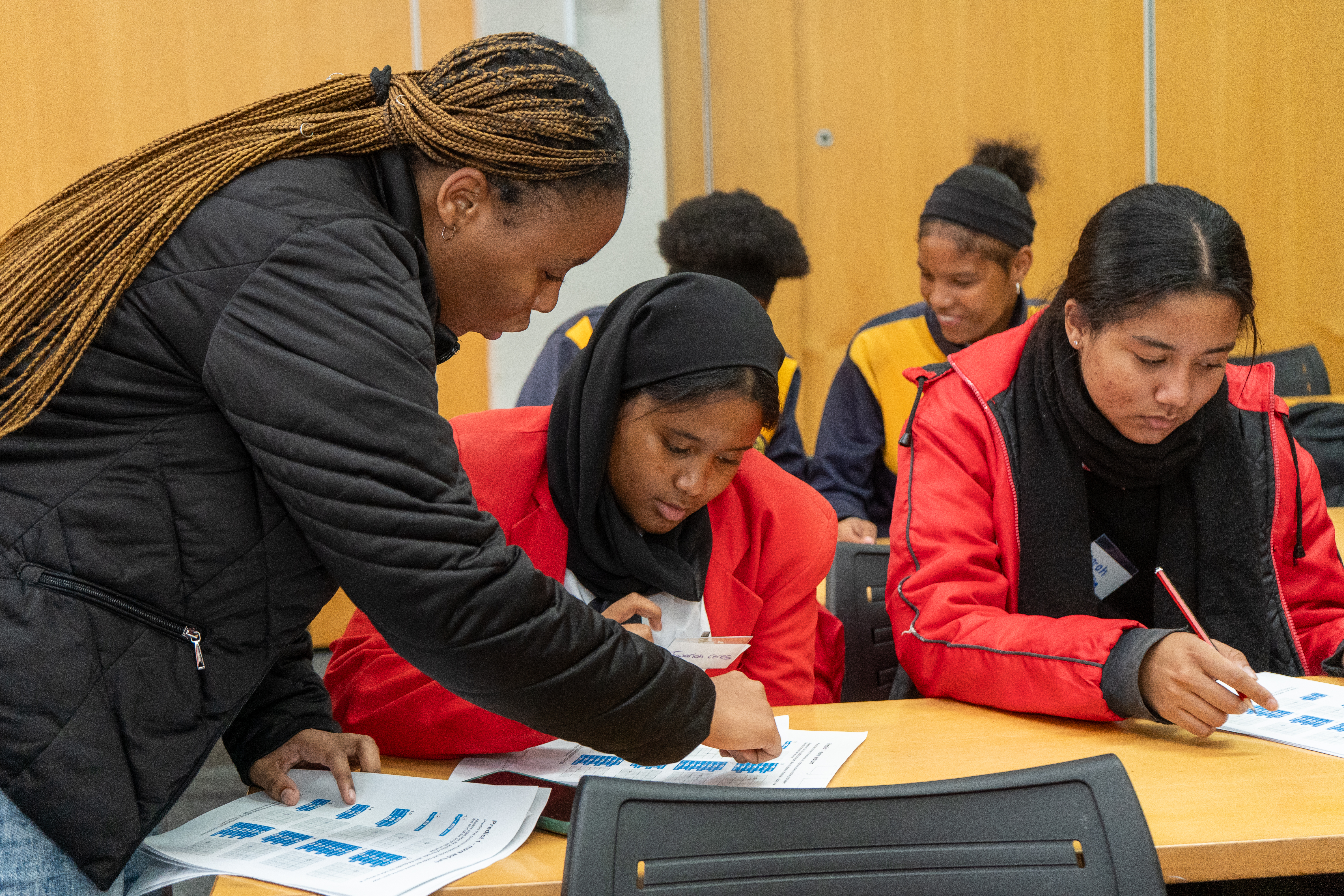
The programme further recognises the unique dynamics that emerge across gender groups. Workshops for boys and girls are therefore facilitated separately, allowing learners to engage more confidently while still building strong mathematical identities within their respective spaces.
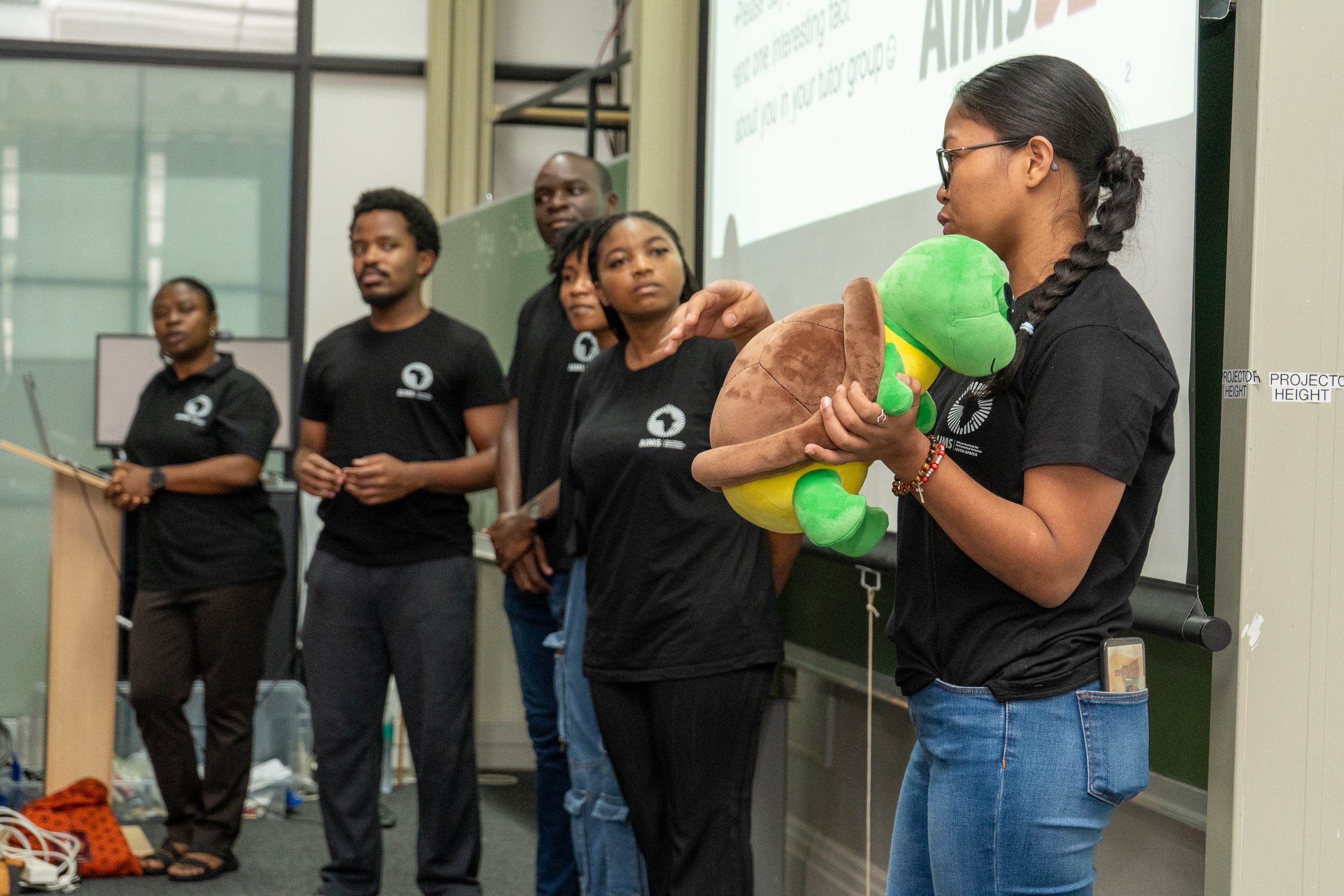
A particularly powerful aspect of the programme has been the involvement of AIMS master’s students. Rather than simply assisting with tasks, the students are increasingly becoming mentors, collaborators, and role models within the learning environment. Through conversations about their personal journeys, struggles with mathematics, and experiences studying across Africa, they create important bridges between aspiration and possibility.
For the learners, this exposure matters deeply. They encounter young Africans who are not far removed from their own realities yet are actively pursuing advanced mathematical and scientific studies.
The programme has also benefited enormously from international collaboration. Jadga Huegle from SAP in Germany continues to contribute her expertise, energy, and support to the project. Jadga, who introduced TurtleStitch to the team, remains central to the workshops by leading or supporting sessions and helping the team think critically about the project’s future directions.
While TurtleStitch is often associated with design and coding, this year’s workshops have focused more intentionally on thinking rather than simply producing designs through trial and error. Learners are being encouraged to reason mathematically — to think carefully about distance, angles, variables, direction, planning on axes, and the consequences of mathematical decisions. Equally important is the development of habits of mind: learning to communicate thinking, explain reasoning, systematic thinking, question assumptions, make mistakes, and persist through revision and correction.
These are not only mathematical skills, but also human skills.
None of this work would be possible without the collective effort of the broader AIMS team. From the facilitators and coordinators to the kitchen staff who prepare breakfast, lunch, snacks, and padkos for learners, every contribution helps create an environment where meaningful learning can happen.
The project’s impact continues to grow, and these workshops represent only one part of a much larger journey. In future newsletters, we look forward to sharing more about the evolving impact of the TurtleStitch project and the stories emerging from the classrooms, learners, and communities involved.
Workshop Dates
7 March 2026
11 April 2026
18 April 2026
25 April 2026