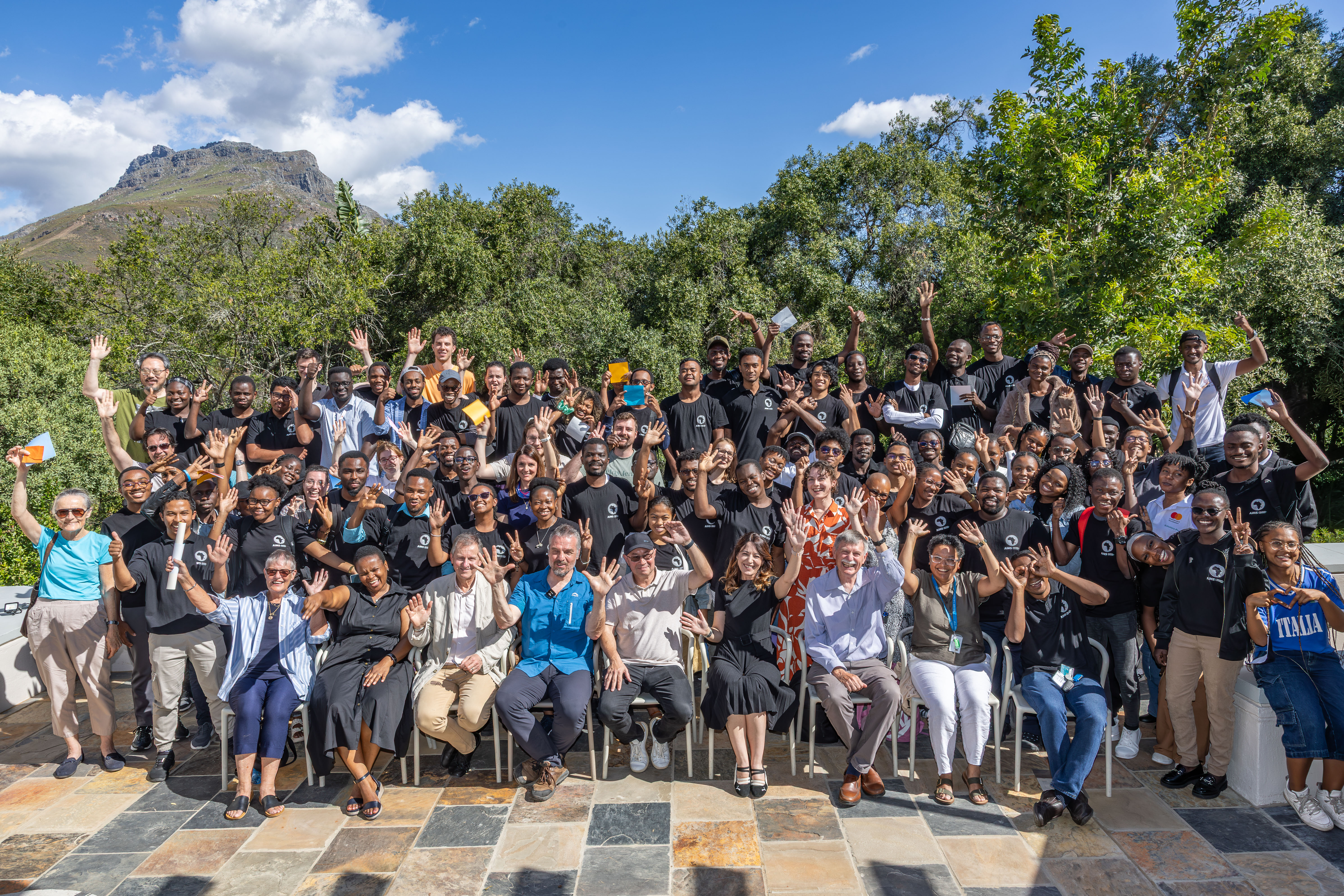
AIMS Public Lecture Series: Exploring the Mathematics of Patterns and Tessellations
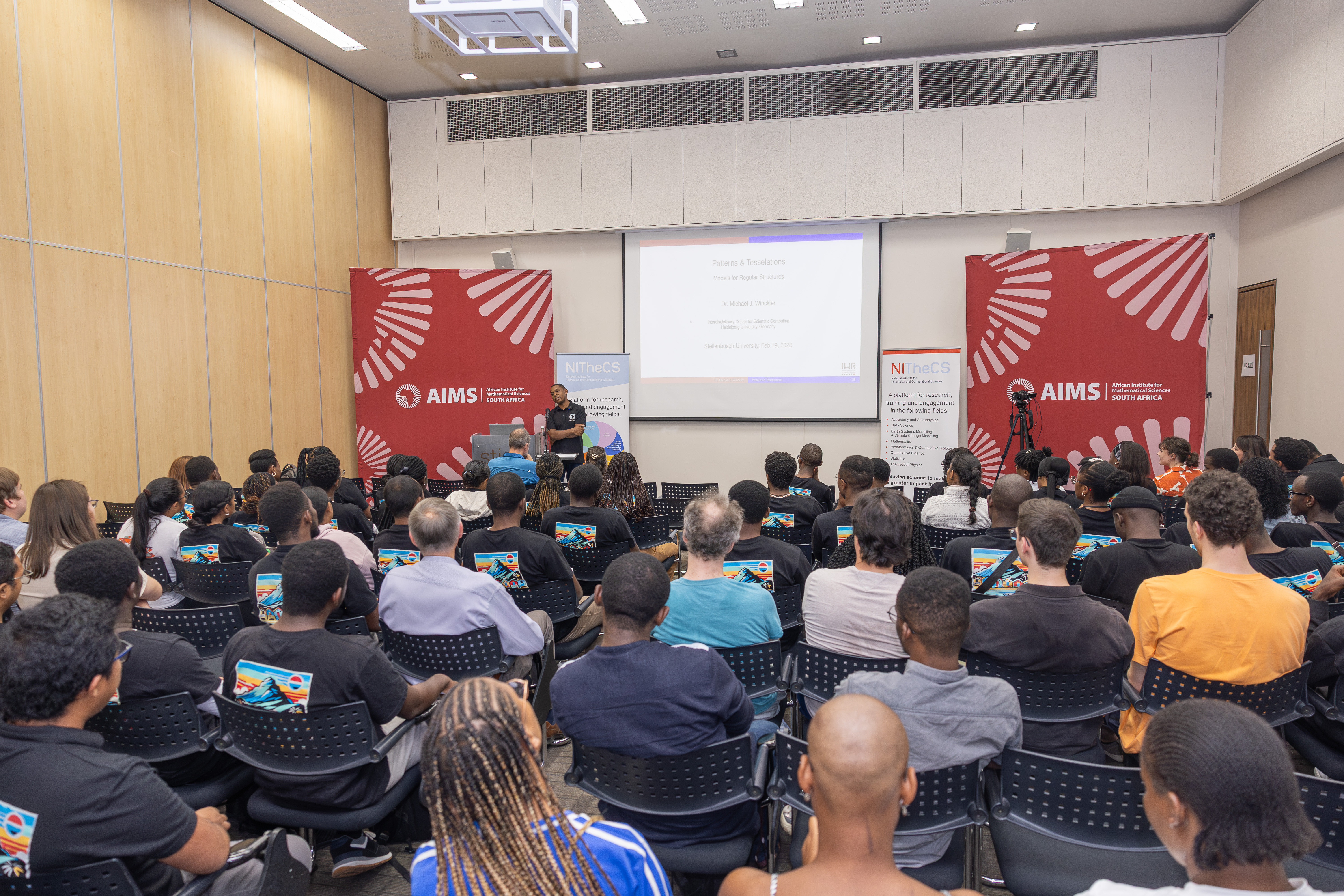
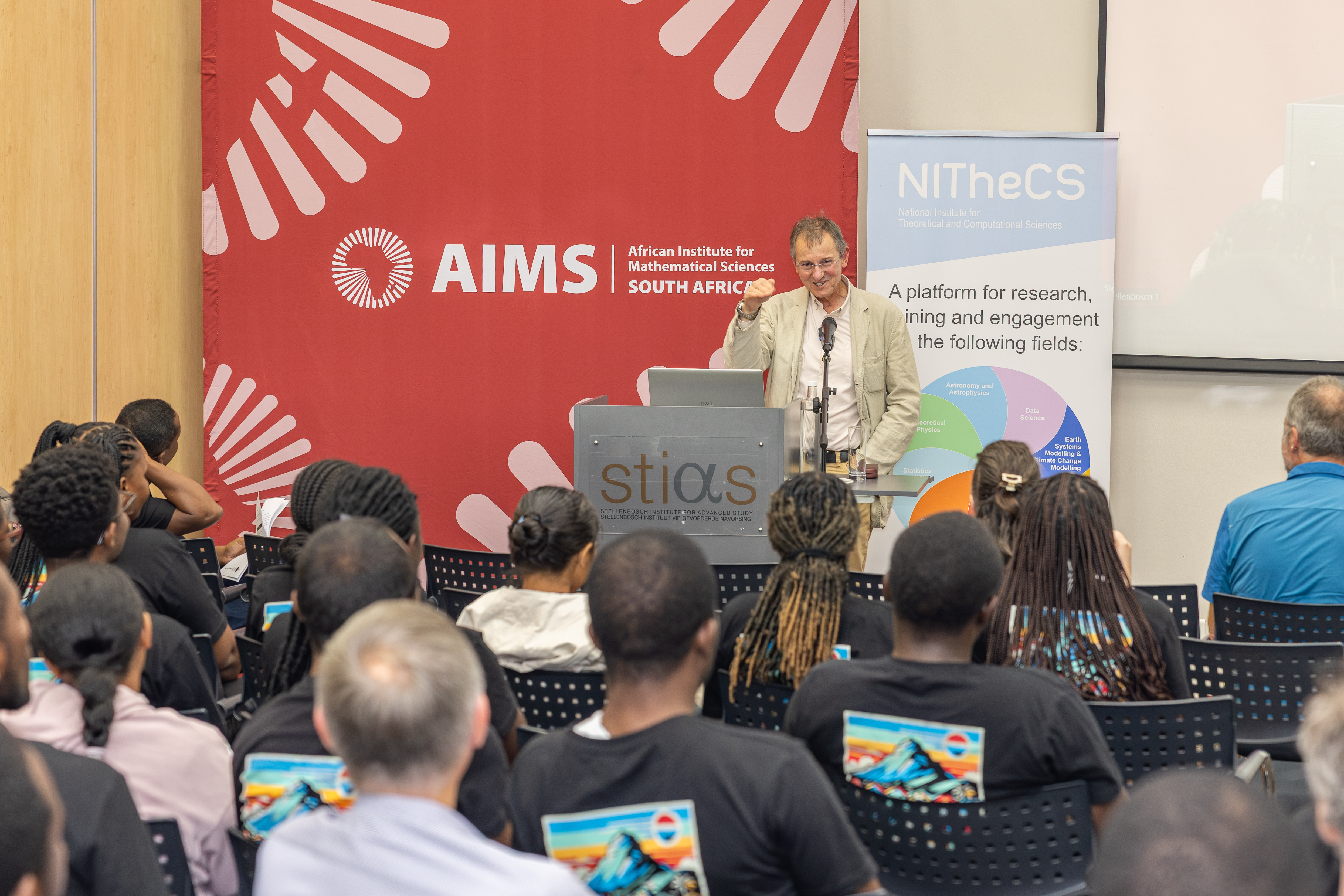
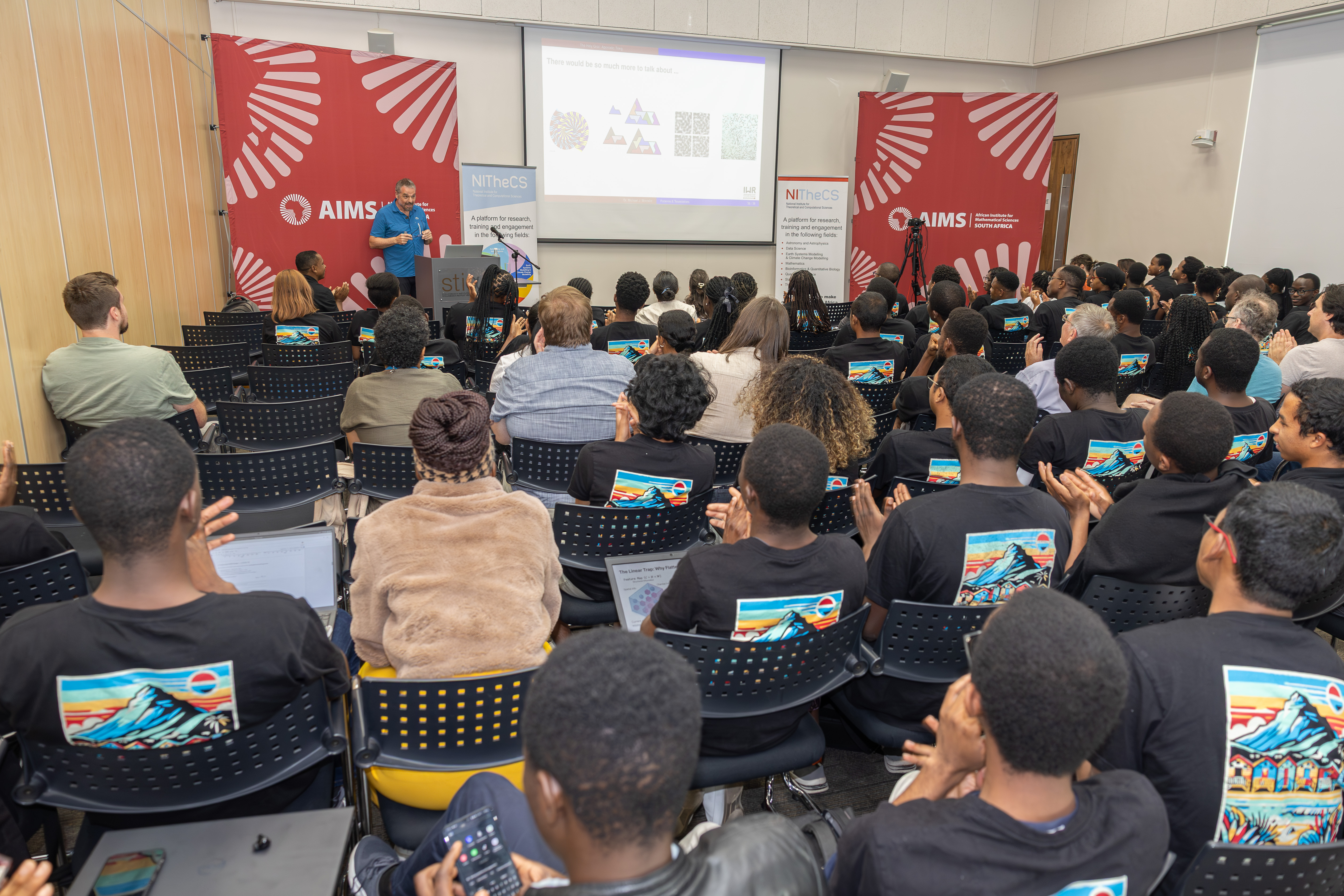
On February 19, 2026, AIMS South Africa, in collaboration with the National Institute for Theoretical and Computational Sciences (NITheCS), hosted a public lecture titled “Patterns and Tessellations: Models for Regular Structures.” The lecture was presented by Dr Michael Winckler, Administrative Director of the Interdisciplinary Center for Scientific Computing (IWR) at Heidelberg University and coordinator of the Africa Research Hub, a newly founded initiative of Heidelberg University’s Excellence Strategy that strengthens research collaborations and institutional partnerships across Africa. The event attracted over 100 attendees, including artists, AIMS students, staff, members of the scientific community, and lifelong learners from Stellenbosch and surrounding communities.
|
|
The lecture explored the mathematics behind tessellations - geometric patterns that cover surfaces without gaps or overlaps, commonly seen in floors, fabrics, and mosaics. Dr Winckler introduced audiences to how mathematicians classify these patterns, from regular and semi-regular tilings to more complex structures that reveal the deep connections between mathematics, art, and craftsmanship.
A highlight of the talk was the discussion of aperiodic tilings, patterns that can cover a surface infinitely but never repeat themselves. Dr Winckler traced the development of this concept from early discoveries such as the Penrose tiles to a major breakthrough in 2022: the discovery of the “Einstein tile,” a single shape capable of tiling the plane infinitely without ever forming a repeating pattern.
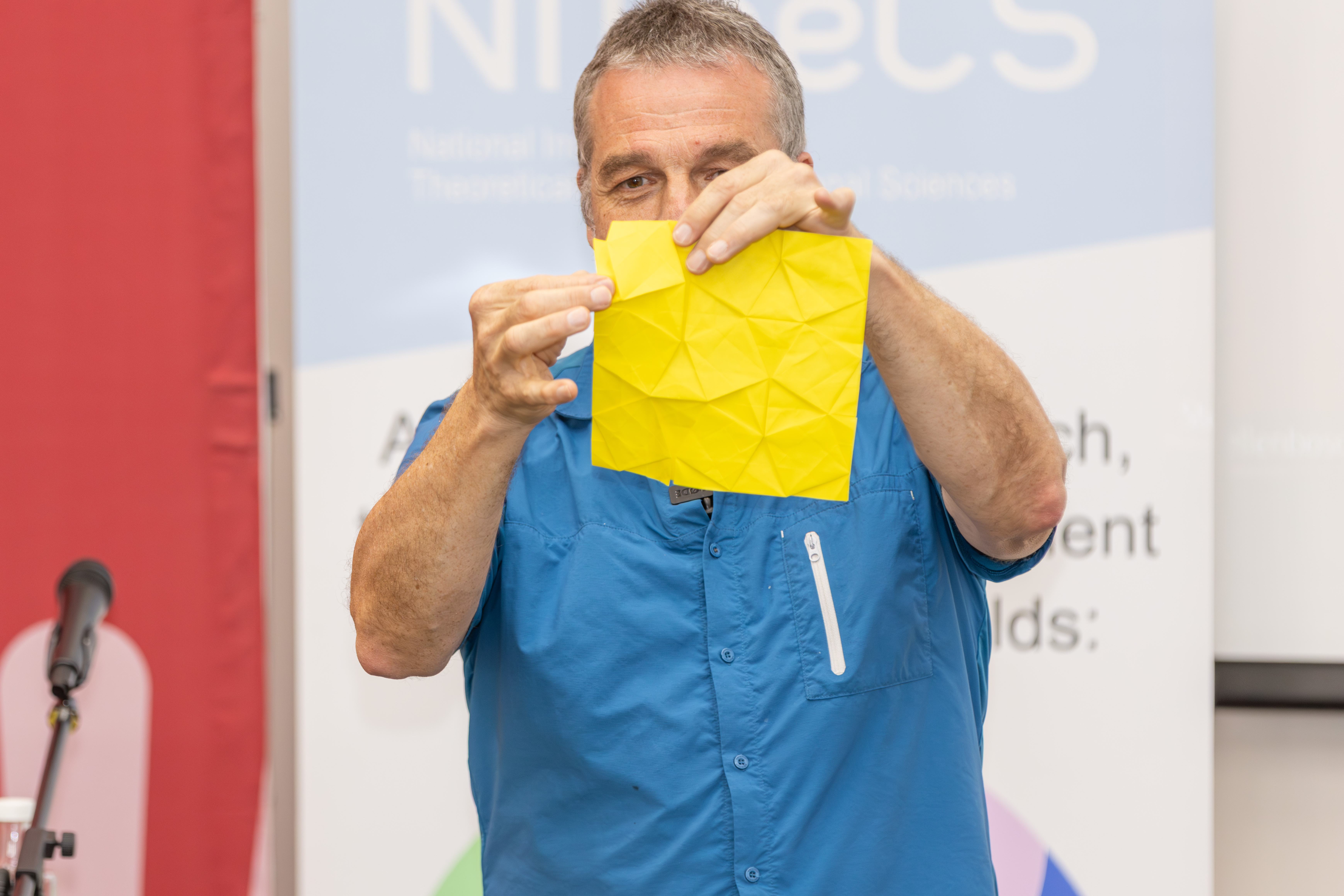
Participants enjoyed an engaging Q&A session and a hands-on activity, where they experimented with creating their own tessellation patterns and explored origami folding techniques that produce repeating geometric structures.
Feedback from attendees highlighted the lecture’s accessibility and impact. Many described the event as engaging, open to the public, and enjoyable, while others noted gaining new insights into emerging areas of mathematics. Several participants also appreciated how the lecture started with the basics, making complex concepts approachable, and said it inspired them to think about how mathematical tools can be applied to real-world problems and shared with broader audiences.
|
|
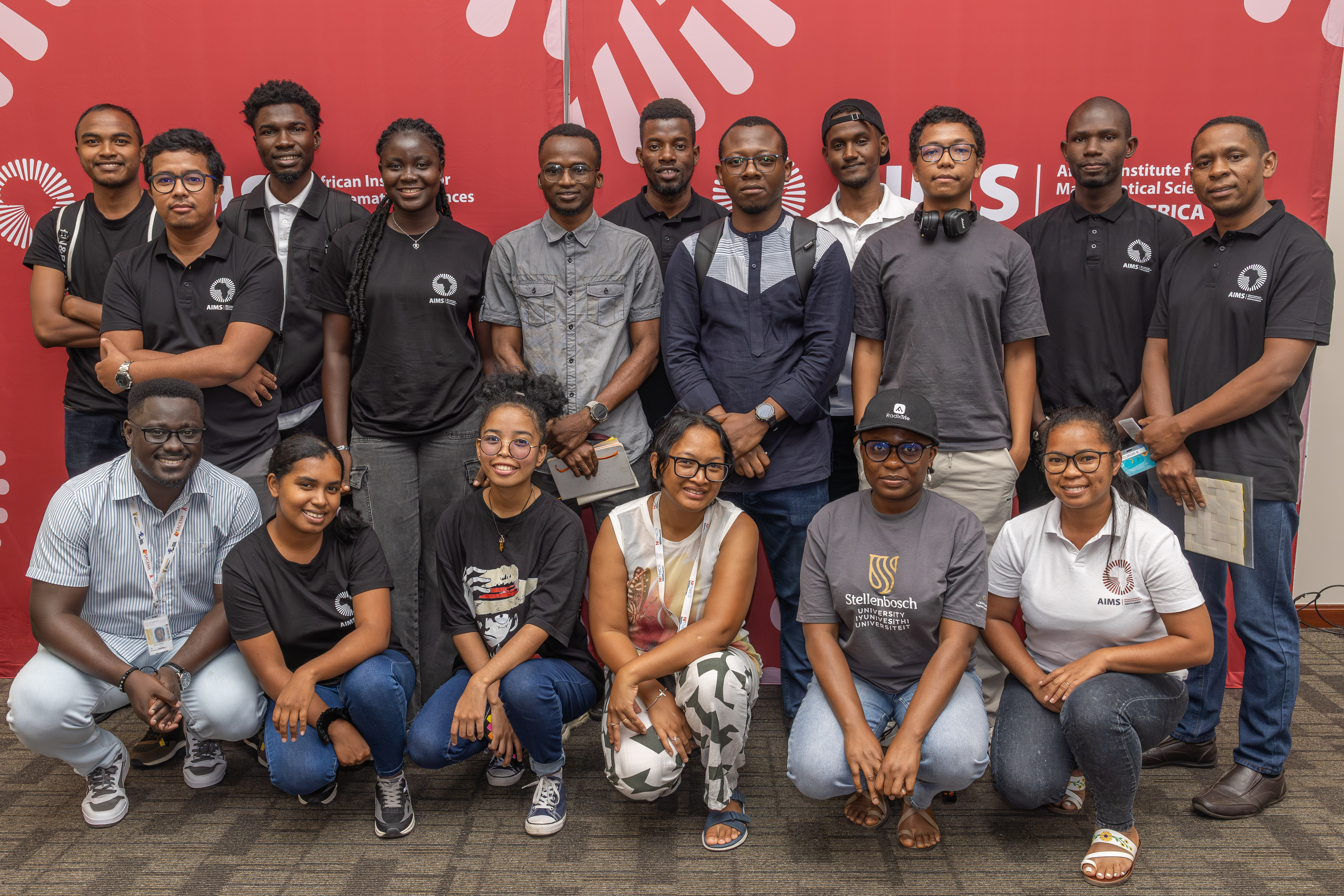
The programme was led by Prof. Dimbinaina Ralaivaosaona (Stellenbosch University and 2007 AIMS Alumnus) and included an AIMS Alumni engagement session, providing AIMS students with an opportunity to connect with fellow alumni around the Western Cape in South Africa.
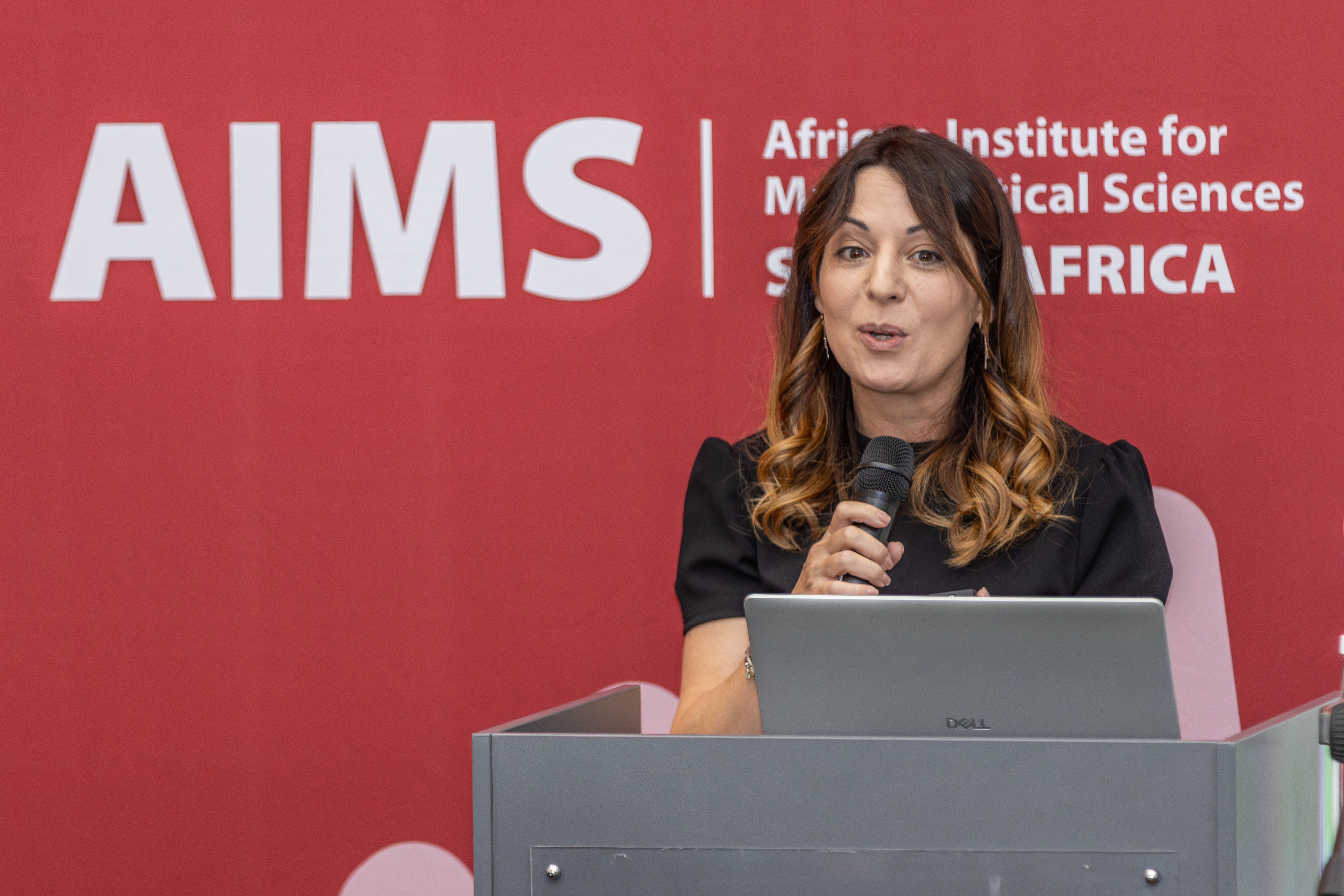
Prof. Francesco Petruccione (Director of NITheCS), Prof. Karin-Therese Howell (Executive Director of AIMS South Africa), and Dr Rejoyce Gavhi-Molefe (House of Science Manager at AIMS South Africa) delivered introductory remarks.
In her vote of thanks, Prof. Howell praised the collaboration that made the lecture possible and announced an exciting new project: the AI Research Foundations for Higher Education initiative. This initiative is a multi-country partnership that includes AIMS South Africa and the FATE Foundation, with support from Google.org. Its goal is to establish a sustainable ecosystem for advanced AI education at higher education institutions in Nigeria, Ghana, Kenya, and South Africa.
The lecture, organised by the AIMS House of Science, is part of the AIMS South Africa Public Lecture Series. This initiative aims to strengthen the connection between mathematics, science, and society. It also supports the ongoing heiAIMS Network for Applied Mathematics and Scientific Computing project, which involves collaboration between Heidelberg University and AIMS South Africa.
|
|
